News (All)

Campolo Testifies at NYS Assembly Hearing about COVID Impact on LI Businesses

Posted: June 17th, 2020

Tags:

Joe Campolo was invited to testify before the New York State Assembly at a virtual hearing on June 17, 2020 about the federal response to the COVID-19 pandemic and its impact on the business community. Below is the text of his testimony.

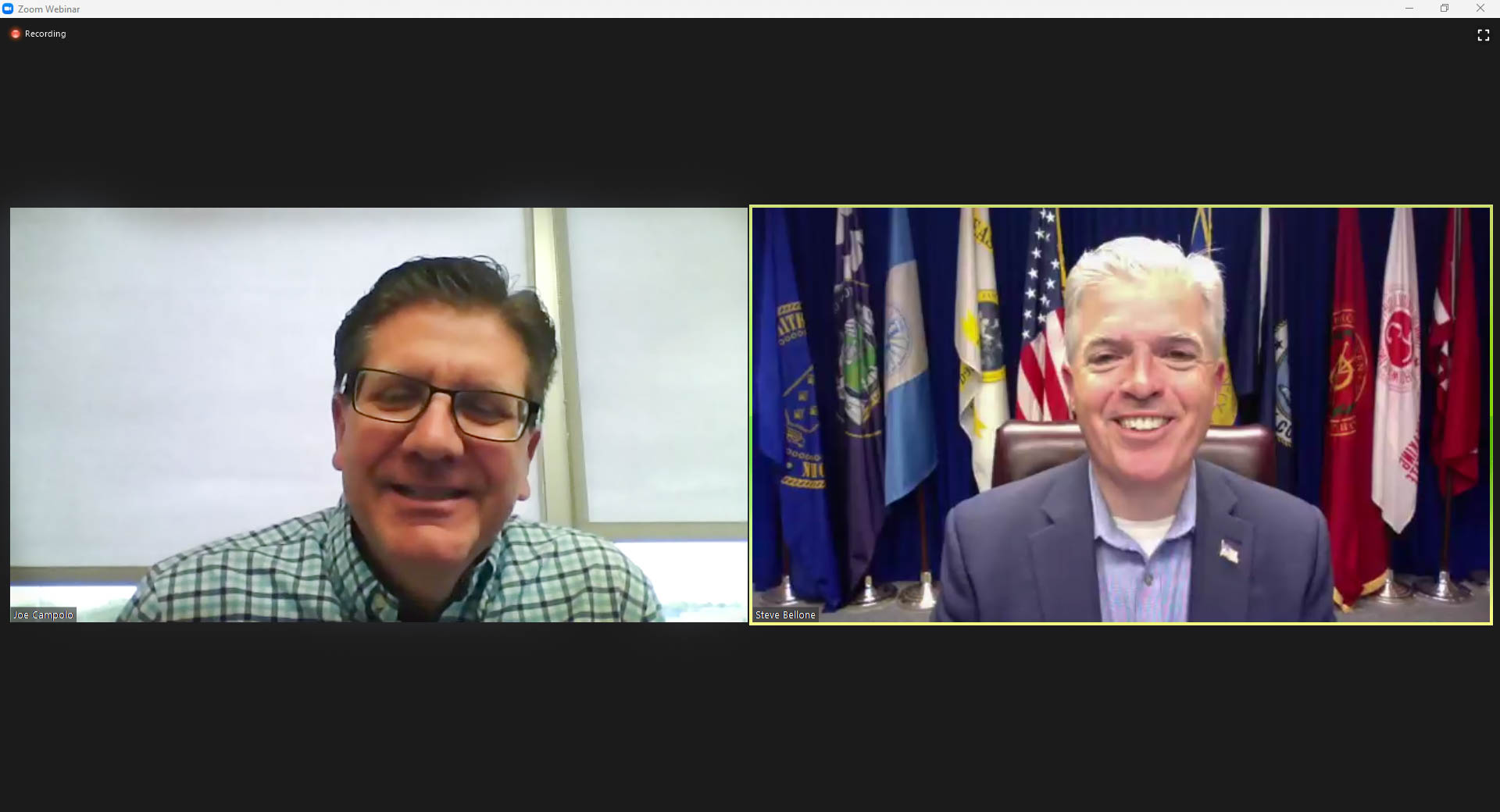
Good morning. My name is Joe Campolo and I am the Managing Partner of Campolo, Middleton & McCormick, LLP, a business law firm with offices across Long Island. In addition to being a small business owner, I have spent my entire career representing Long Island small businesses. I am also the Chairman of the Board of Directors of HIA-LI, steward of the second largest industrial park in the nation (the Long Island Innovation Park at Hauppauge), and home to 1,400 businesses. I also just spent the past hour in a virtual Town Hall with Suffolk County Executive Steve Bellone to hear his perspective. I have seen firsthand and personally experienced the catastrophic carnage that COVID-19 has unleashed on the Long Island business community.

There is simply no playbook about how to get through these challenges. The swift enactment of the CARES Act was welcome news in the early days of the pandemic, particularly the promise of Paycheck Protection Program (PPP) dollars. However, the under-funding of the first tranche (which for all we knew at the time, would be the only tranche) caused unbelievable angst and turmoil. Our firm and many of our clients did not receive funding and were forced to accelerate cost-cutting measures and layoffs.

Fortunately, the second tranche helped mitigate the situation – but the lack of clarity in guidance issued by the SBA and the Department of the Treasury caused these dollars to be used inefficiently. We, along with many others on Long Island, did not want to burn those dollars without work to be done, so we spent countless hours and days that could have been spent productively, instead trying to do mathematical gymnastics to make the numbers work.

Further, the issuance of enhanced federal unemployment benefits in conjunction with PPP dollars caused tremendous inefficiencies that continue today. At many businesses, some people chose not to return to work but to stay home and receive the enhanced benefits. The recent passage of the PPP Flexibility Act certainly helped expand the time to deploy PPP dollars, but unfortunately, many businesses already spent those dollars upon receiving them, at a time when productivity was very low – in essence, wasting those dollars. Had these been the goalposts when the program was first enacted, employers and employees could have worked together to utilize supplemental unemployment benefits during non-productive times, then deployed PPP when work restarted.

To move forward, we must recognize that the economy is driven by productivity, which is driven by worker output – so it is paramount to get people back to work. Here on Long Island, the largest percentage of jobs lost have been low-paying jobs in restaurants, hotels, and the hospitality sector. Our revitalized downtowns, which had become a hallmark of our economic success over the past 10 years, have been decimated. So it is critical to have future and specific relief geared toward those industries.

We should also be making a concerted effort to focus spending on the minority neighborhoods that have been hit hardest by both the health and economic crises of COVID-19. We have an opportunity before us to pump trillions of dollars into the economy – we must seize the opportunity to support these inner-city communities and help correct the economic disparities that existed there before COVID.

Thus, we must make sure that dollars that are earmarked for local municipalities for capital projects are not cut. Infrastructure enables more activity, which in turn promotes long-term productivity. Infrastructure investment in depressed areas therefore serves multiple purposes – adding high-paying jobs where they are needed, thereby increasing productivity, thereby increasing the GDP on Long Island. It is only by growing GDP with high-paying jobs that we will be able to fully recover post-COVID without an overwhelming debt burden.

Thank you.

View a recording of the testimony here.
Business Unusual: Infrastructure Investment with Guest Rich Humann, Principal & CEO of H2M

Posted: June 16th, 2020

June 16, 2020 – Episode 5 of Business Unusual Weekly Recovery Webinar with business leaders Joe Campolo and Peter Klein. In this episode, they welcomed Rich Humann, President & CEO of H2M architects + engineers. The discussion focused on how stimulus dollars are being used, whether infrastructure spending can fill tax voids in the middle of a pandemic, and whether we can grow our way out of this crisis by investing in infrastructure.

WEBINAR RECAP: Paycheck Protection Plan Flexibility Act

Posted: June 16th, 2020

On June 16, 2020, Christine Malafi joined Gettry Marcus, CPA, P.C. for Part 3 of their successful webinar series on PPP loan forgiveness. This webinar focused on the recently passed Paycheck Protection Program Flexibility Act (“PPPFA”), which greatly increases the likelihood of loan forgiveness.

Topics included:

  • An increase in the Covered Period
  • During the period February 15, 2020 to December 31, 2020, loan forgiveness will be exempt from a reduction in the number of FTE’s pursuant to additional PPPFA guidelines
  • To receive loan forgiveness, a borrower now must use at least 60% of the PPP loan amount for payroll costs and may use up to 40% for non-payroll costs (with possible “cliff” provisions)
  • PPP loan terms can now generally range from 2 to 5 years, with the possibility of a longer 10-year term
  • PPP loan borrowers are now eligible for the CARES Act payroll tax deferral
  • Planning Tools
  • SBA and Treasury Department Guidance

View the webinar here.

Malafi featured in Newsday’s “Small Business: Wage Issues Employers Should Keep on Their Radar as They Reopen”

Posted: June 15th, 2020

By Jamie Herzlich, Newsday

The pandemic has shaken up the structure of many workplaces.

For many companies, it’s resulted in reduced workforces, changing roles and responsibilities for employees and salary reductions.

Given that, as companies reopen, there are wage and hour issues employers should be aware of including the possibility that some employees previously designated as overtime exempt no longer fit into that category.

Keep in mind the salary and duties test differs for those considered highly compensated white-collar employees. For 2020, these employees are considered exempt from overtime if they make at least $107,432 and perform certain functions, says Christine Malafi, a senior partner at Ronkonkoma-based Campolo, Middleton & McCormick LLP. See https://tinyurl.com/htnrp8m for duties.

Malafi advises employers to “review classifications as you hire employees back.”

Separately, employers also need to make sure they are properly tracking hours especially if some employees will remain remote, says Malafi.

Consider that if hourly employees check their work emails outside of working hours, even if told not to, or forbidden to do so, they are still entitled to overtime pay, she says. To help with that, employers might consider actually cutting off access to work emails and/or work VPNs after a certain time, she noted.

Read the full article on Newsday’s website.

CMM Strategies Presents Business Unusual: Transportation Navigation

Posted: June 10th, 2020

Event Date: June 30th, 2020

Has the COVID pandemic sounded the death knell of mass transit and other forms of shared transportation – or is this the opportunity the industry has been waiting for?

Transportation in nearly all forms has taken a devastating hit since March. Join us as Joe Campolo and Peter Klein welcome John Corrado, President of Suffolk Transportation Service, Inc. for a deep dive into the future of transit. The discussion will focus on how the sector is reopening, what the future looks like for riders, and the technology that can keep transportation moving forward including on-demand apps and “Uber-style” transit services.

Transit changes will have an extraordinary impact on the business community, real estate development, school districts, and the Long Island economy – empower yourself with the knowledge of what’s to come. As always, Joe and Peter will also discuss the latest business recovery updates.

Date: Tuesday, June 30
Time: 12:00 p.m. (note new time for this episode only)

Have questions for our speakers? Submit now to Lauren at lkanter@cmmllp.com or via the Q&A feature during the webinar.

Business Unusual: Real Estate Development Reimagined with Guest Jim Coughlan, Principal & Co-Founder of TRITEC

Posted: June 9th, 2020

June 9, 2020 – Episode 4 of Business Unusual Weekly Recovery Webinar with Joe Campolo and Peter Klein. In this episode, they welcomed Jim Coughlan, Principal and Co-Founder of TRITEC Real Estate Company. This episode focused on the real estate development sector – a key piece of Long Island’s previously booming economy. Now that the COVID pandemic has changed how we work, live, and play, how will the real estate development sector respond to changing needs?

Webinar: Paycheck Protection Program Flexibility Act featuring Christine Malafi

Posted: June 9th, 2020

Event Date: June 16th, 2020

On June 16, 2020 from 10:00 – 11:00 a.m., join Gettry Marcus, CPA, P.C. and CMM’s Christine Malafi for Part 3 of the webinar series on the recently passed Paycheck Protection Program Flexibility Act (“PPPFA”). The PPPFA greatly increases the likelihood of loan forgiveness.

This webinar will address PPPFA’s impact on earlier provisions of the PPP loan program, including the following:
• An increase in the Covered Period from 8 to 24 weeks, but no later than December 31, 2020.
• During the period February 15, 2020 to December 31, 2020, loan forgiveness will be exempt from a reduction in the number of FTE’s pursuant to additional PPPFA guidelines.
• To receive loan forgiveness, a borrower now must use at least 60% of the PPP loan amount for payroll costs and may use up to 40% for non-payroll costs (with possible “cliff” provisions).
• PPP loan terms can now generally range from 2 to 5 years, with the possibility of a longer 10-year term.
• PPP loan borrowers are now eligible for the CARES Act payroll tax deferral.
• Planning Tools
• SBA and Treasury Department Guidance
• Q&A

PROGRAM PANELISTS:

  • Lee Ferber, CPA, Partner at Gettry Marcus CPA, P.C.
  • Christine Malafi, Esq., Senior Partner at Campolo, Middleton & McCormick, LLP
  • Nicholas Backmann, CPA, Supervisor at Gettry Marcus CPA, P.C.

Register soon as we expect this webinar to close out!

CMM Strategies Presents Business Unusual: Infrastructure Investment

Posted: June 8th, 2020

Event Date: June 16th, 2020

Business owners: don’t miss our next “Business Unusual” webinar as Joe Campolo and Peter Klein discuss Long Island business recovery, the markets, and strategies to move forward productively. They will also welcome Rich Humann, President & CEO of H2M architects + engineers, to address infrastructure investment.

Investing in infrastructure is often viewed as the fastest way to boost economic growth by stimulating job creation and helping a battered economy recover. But COVID-19 has turned old rules and accepted wisdom on its head. Is infrastructure spending feasible and worthwhile in today’s new normal? Join us for a critical discussion about which projects are happening, which are paused, and which have been axed. We’ll address how stimulus dollars are being used, whether infrastructure spending can fill tax voids in the middle of a pandemic, and whether we can grow our way out of this crisis by investing in infrastructure.

Q&A is a critical piece of each episode, so bring your questions.

Date: Tuesday, June 16
Time: 11:30 a.m.

Have questions for our speakers? Submit now to Lauren at lkanter@cmmllp.com or via the Q&A feature during the webinar.